Veronica Henderson - cello Elizabeth Mucha - piano
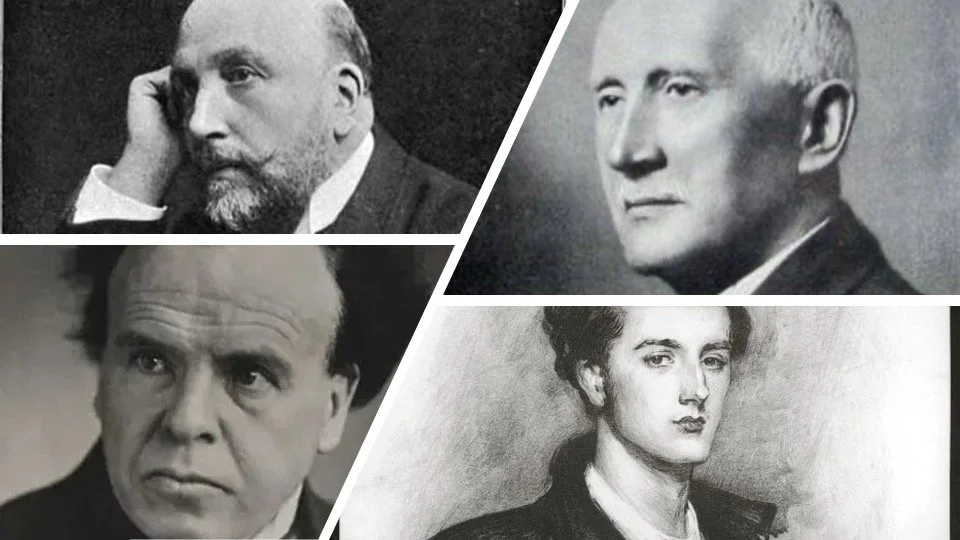
A Scottish-inspired programme ahead of St Andrew’s Day, including Frederick Lamond’s sonata and works by Alexander MacKenzie, John Blackwood McEwen, and Hamish MacCunn
Alexander Mackenzie (1847 - 1935)
Larghetto and Allegretto Op 10
Hamish MacCunn (1868 – 1916)
Three Romantic Pieces
L’Espérance
Sérénade
Rêve d’Amour
John Blackwood McEwan (1868 – 1948)
Hill’s O’ Heather (A Retrospect)
Frederick Lamond (1868 - 1948)
Sonata in D Major
Movements 2 and 3
Classical music flourished in Scotland during the second half of the nineteenth century, encouraged by earlier visits from musicians such as Felix Mendelssohn and Frederic Chopin. Opportunities for formal musical training, however, remained limited, prompting many young Scottish composers and performers to continue their studies in London or on the Continent.
In 1857, at the age of ten, Alexander Campbell Mackenzie was sent to Germany to study the violin. He continued his training at London’s Royal Academy of Music in 1862, returning as Principal in 1888—a position he held for thirty-six years. In 1889, he joined George Grove, director of the Royal College of Music, in founding the Associated Board of the Royal Schools of Music to promote high standards in musical education and assessment. Today, young musicians around the world continue to sit ABRSM examinations.
Mackenzie was among the first Scottish composers to weave national idioms into large-scale works. The son of a Scots fiddler, he would have grown up immersed in the country’s folk traditions. His Pibroch Suite was performed by the virtuoso violinist Sarasate, while the celebrated Polish pianist Paderewski commissioned his Scottish Concerto and performed it on many occasions. Yet Mackenzie’s musical language remained rooted in that of his predecessors rather than seeking radical new directions. Composed in 1874 and dedicated to the cellist Hugo Daubert, Larghetto and Allegro opens with a recitative that gives way to the tender lyricism of the Larghetto. A sprightly Allegro provides contrast before the return of the opening slow section.
Born in the same year, Hamish MacCunn and John Blackwood McEwen both pursued further musical training in London and, like Mackenzie, became prominent figures in the city’s musical establishment. Both nevertheless retained a strong connection to their Scottish roots. MacCunn’s early overture The Land of the Mountain and Flood, described by George Bernard Shaw as ‘a charming Scotch overture that carries you over the hills and far away’, is still heard in concert today. His Three Romantic Pieces, composed in 1894, turn instead towards Europe for their inspiration. Sérénade has the gentle lilt of a barcarolle, while L’Espérance and Rêve d’Amour reveal his melodic gift, their harmonies recalling Schumann and Liszt. MacCunn was immortalised in Two Strings to Her Bow, a painting by the nineteenth-century Scottish artist John Pettie, depicting a young woman walking arm-in-arm with two suitors competing for her affection.
John Blackwood McEwen likewise spent much of his life in London, succeeding Mackenzie as Principal of the Royal Academy of Music in 1924 and serving until 1936. His music draws on the French Romantic tradition of Chausson and the rich harmonic worlds of Strauss and Scriabin. Yet many works in his extensive catalogue return to Scotland in both title and atmosphere. Composed in 1918, Hills o’ Heather (A Retrospect) is a nostalgic rhapsody whose simpler harmonic language owes more to French impressionism, evoking the mist and heather-clad hills of the Highlands.
The second and third movements of Frederick Lamond’s Sonata in D major bring the programme to a close. Born in Glasgow, Lamond is remembered above all as a leading authority on Beethoven before Artur Schnabel; he also edited the complete piano sonatas for Breitkopf & Härtel. His studies in Germany included lessons with Franz Liszt, and he became renowned for his interpretations of both composers.
His small compositional output included a symphony, the orchestral overture Aus Dem Scottischen Hochlande, an opera, a piano trio and this cello sonata, first performed at St James’ Hall, London, in 1889 by Alfredo Piatti with the composer at the piano. Though the influence of Beethoven and Brahms is evident, the sonata reveals a distinctive voice with even a nod towards a Scottish jig in the 3rd movement. In 1890, a critic in the Musical Times judged Lamond “capable of many and perhaps great things in the future”. That promise remained unfulfilled: he ceased composing at twenty-one and devoted his career to performance. Lamond spent most of his adult life in Germany, but during the Second World War he and his wife, the Austrian actress Irene Triesch, were forced to flee, partly because of her part-Jewish background and his outspoken contempt for the Nazis. He died in Stirling in 1948. Among his pupils, the best known was Victor Borge.